
Louisiana Deed Records
Louisiana deed records are property documents filed with the Clerk of Court in each of the state's 64 parishes. These records cover deeds, conveyances, mortgages, and other instruments that affect ownership of land. You can search Louisiana deed records online through the statewide eClerks LA portal, through parish-specific databases, or in person at the clerk's office in the parish where the property sits.
Louisiana Deed Records Quick Facts
How Louisiana Deed Records Work
Louisiana keeps land records at the parish level. Each of the 64 parishes has a Clerk of Court who serves as both the Ex-Officio Recorder of Mortgages and the Register of Conveyances. This is different from most U.S. states, which have a separate County Recorder office. In Louisiana, the same clerk handles both conveyance records (deeds and transfers) and mortgage records (liens and encumbrances). Every document that affects title to real property in the state must be recorded with the clerk in the parish where the land sits.
Louisiana uses a Grantor-Grantee Index system. The grantor is the seller or vendor who transfers title. The grantee is the buyer or vendee who receives it. Records are indexed by both names so you can search from either direction. This lets you trace a chain of title forward or backward through time. Most parish clerks now have digital indexes going back decades, with some parishes holding records from the 1700s and 1800s.
There are two numbering systems in use. Older records use Book and Page format, often noted as COB (Conveyance Office Book) and FOL (Folio). More recent records use an Instrument Number assigned at the time of recording. You may see both formats depending on when a document was filed.
The eClerks LA Statewide Portal provides free index searches across all 64 parishes.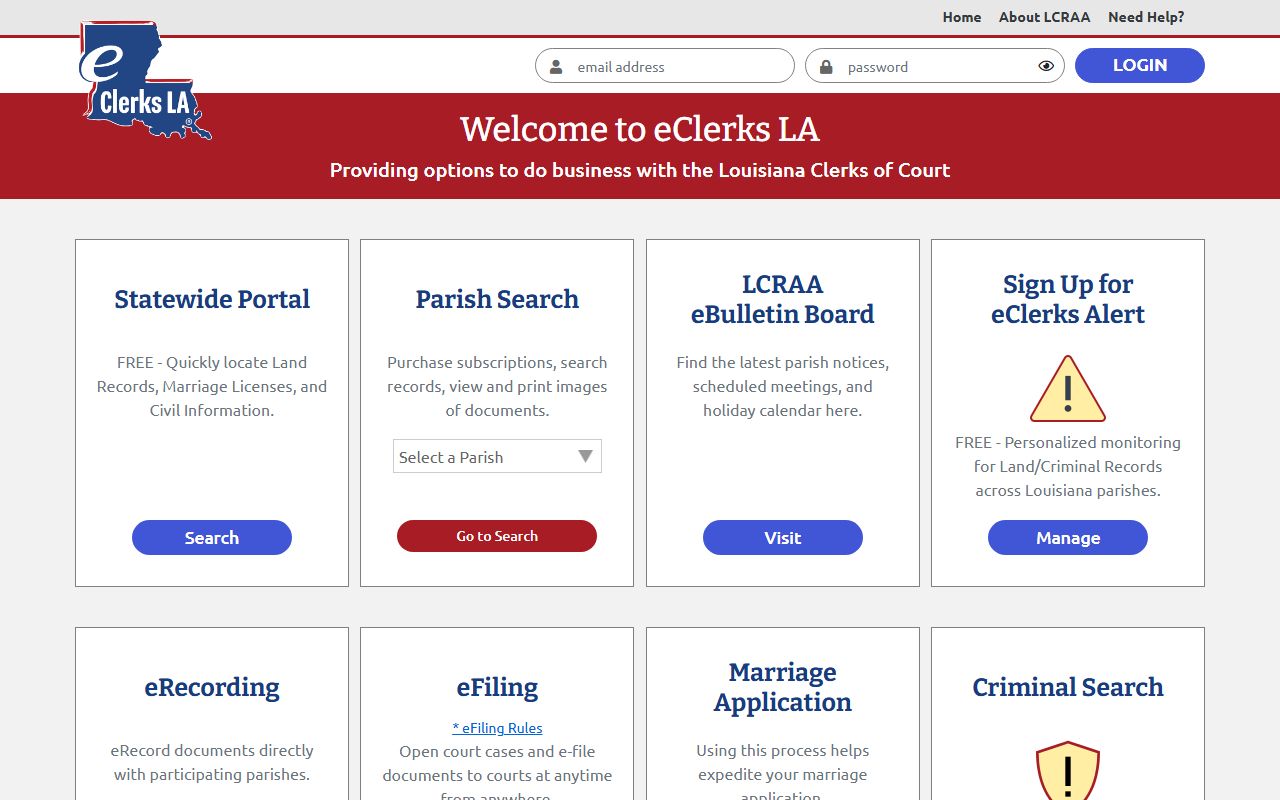
The free statewide index search shows instrument numbers, party names, document types, and filing dates. To view actual document images, a paid parish subscription is required.
Primary Sources for Louisiana Deed Records
The main place to find any Louisiana deed record is the Clerk of Court in the parish where the property is located. Each clerk maintains two sets of records: the conveyance index and the mortgage index. The conveyance index holds all transfers of ownership including deeds, cash sales, donations, exchanges, and partitions. The mortgage index holds mortgages, liens, judgments, and UCC filings. You must search both to get a complete picture of a property's legal status.
Several online portals give access to these records without a trip to the courthouse. The Louisiana Clerks' Remote Access Authority runs the eClerks LA statewide portal at eclerksla.com. This portal was created under La. R.S. 13:754 and launched November 9, 2015. The free statewide search covers indices for land records, marriage licenses, and court records across all 64 parishes. Parish-level subscriptions let you view actual document images.
Clerk Connect provides multi-parish deed records search and e-recording for participating Louisiana parishes.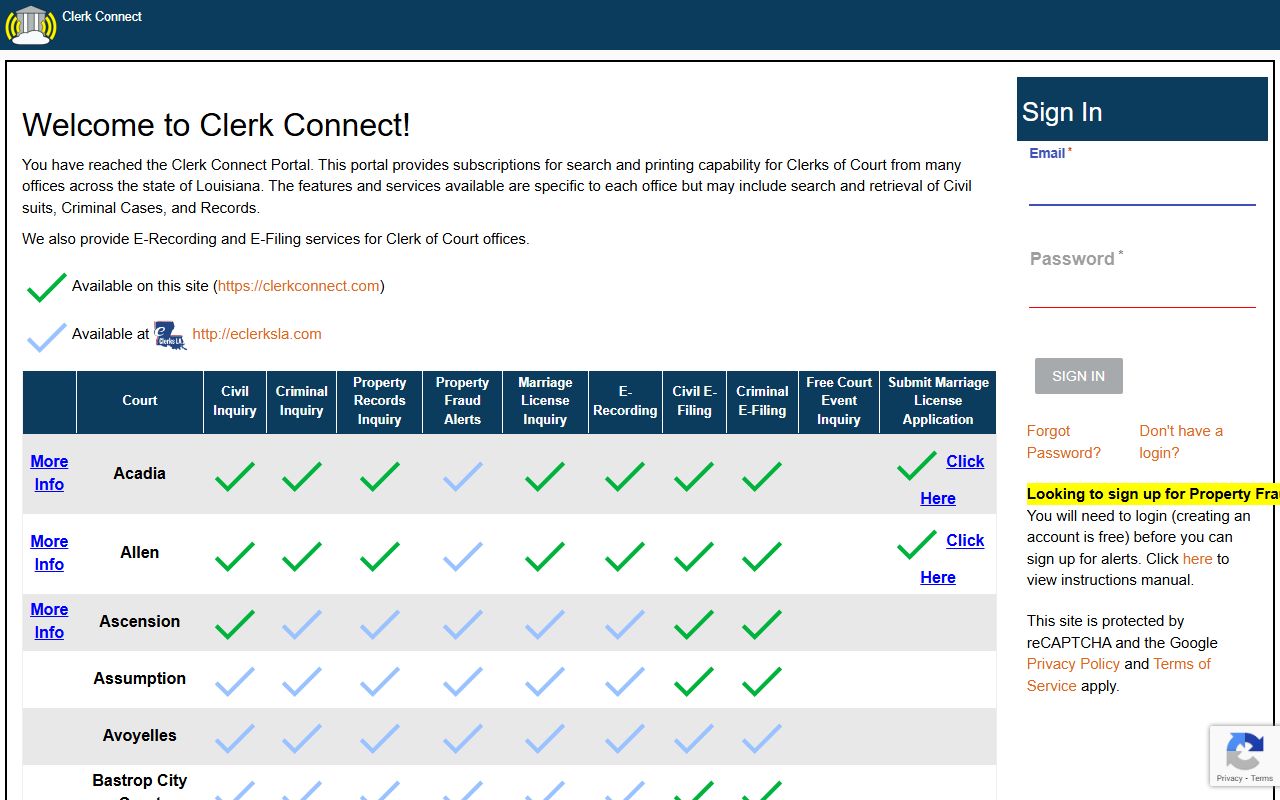
Clerk Connect serves Allen, Natchitoches, Claiborne, Jackson, Richland, Bossier, Caddo, Lafourche, Lincoln, and East Baton Rouge parishes for search. It also handles e-recording and e-filing for several of those same parishes.
Some parishes run their own separate portals. Jefferson Parish uses JeffNet, which provides access to records from 1825 forward with over 140 million images. Orleans Parish runs its own Civil District Court portal with records back to 1987 online, though physical records date to the colonial era. Rapides Parish uses RAPID E-Search, and several others use the CottHosting platform for older digitized indexes.
State-Level Deed Record Resources
Beyond the parish clerks, a few state agencies maintain records that relate to Louisiana land ownership. The Louisiana Division of Administration operates the State Land Office, which holds historical land grants, U.S. and State Tract Books, Section 16 School Lands, and State Patents. These are the earliest title documents for Louisiana land, some going back to Spanish and French colonial grants.
The Louisiana State Land Office holds historical deed records and land grant documents dating to the colonial era.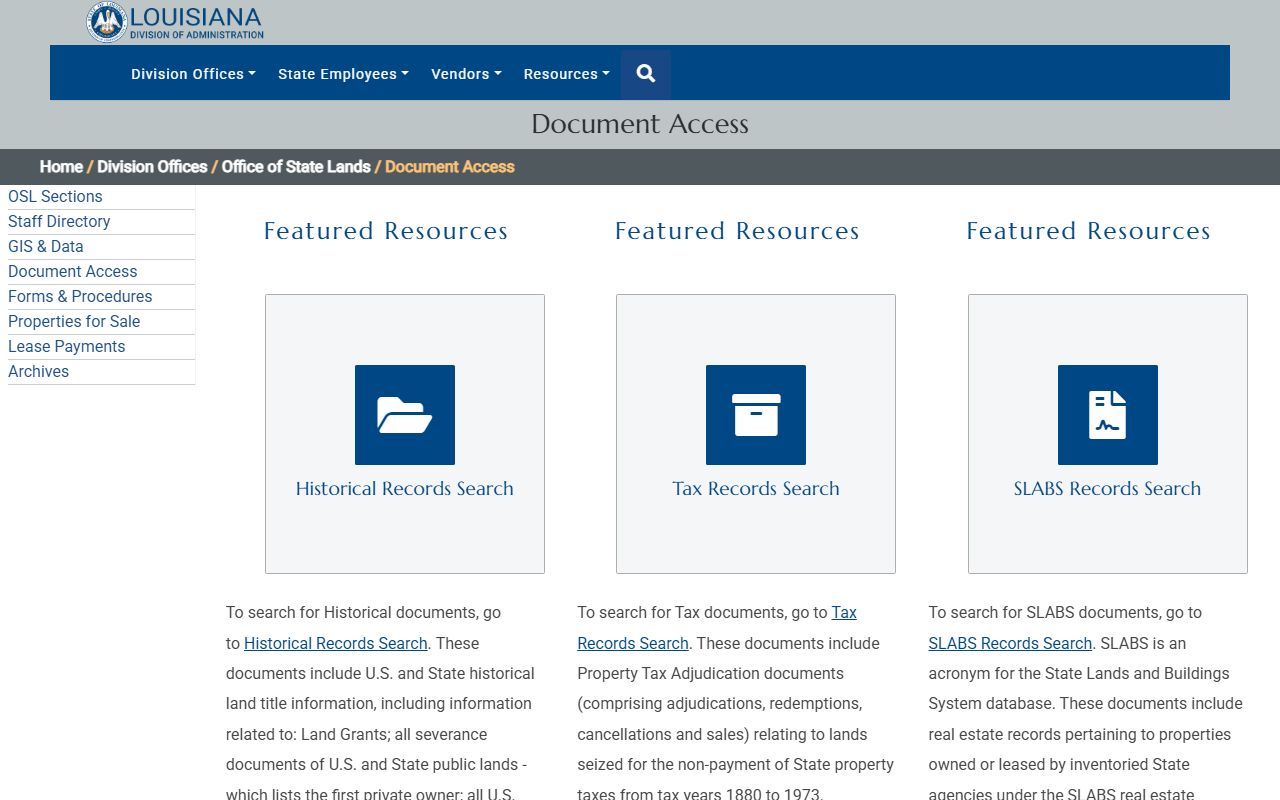
The State Land Office is located at 1051 North Third Street, Baton Rouge, LA 70802. Phone: (225) 342-4570. They handle requests for historical land title information, tract book searches, and original grant records that predate parish record systems.
The Louisiana Secretary of State maintains business and UCC records that may relate to property transactions.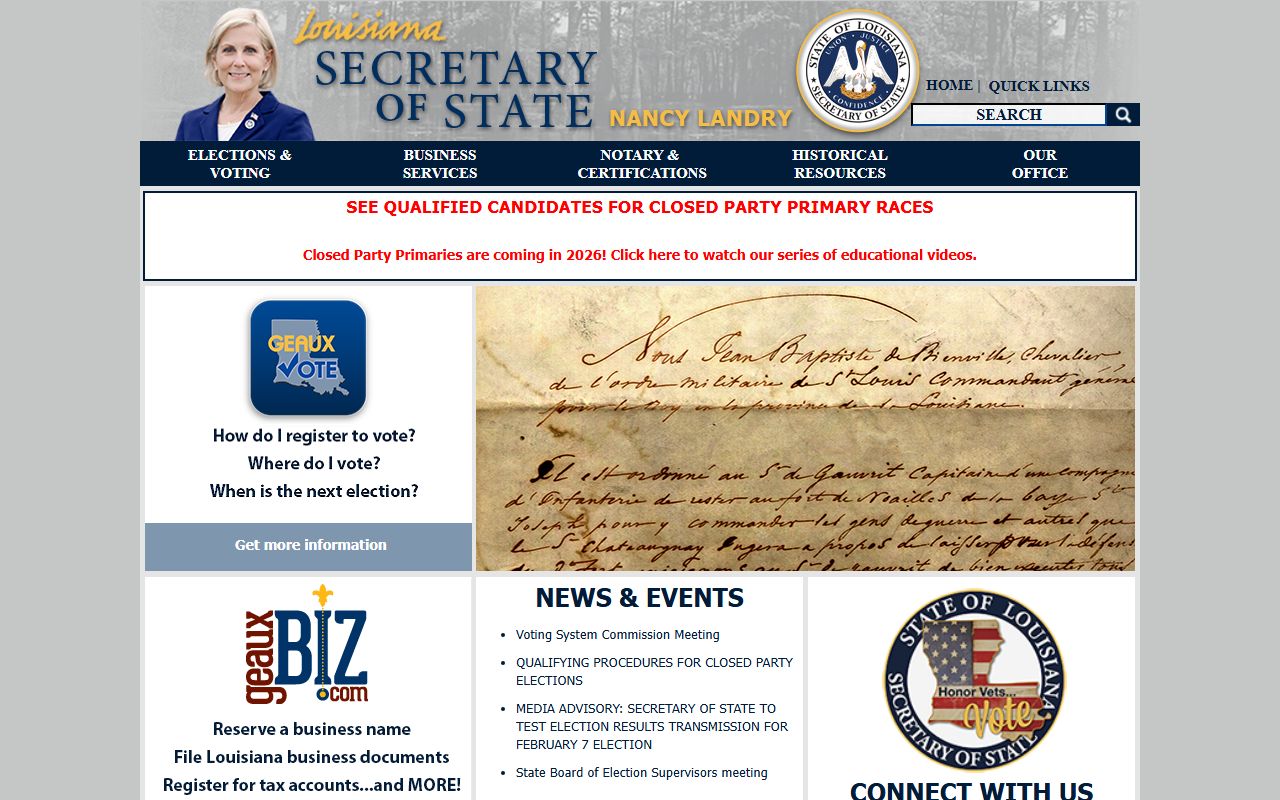
The Secretary of State office at 8585 Archives Square, Baton Rouge handles UCC filings, business entity records, and other documents that can affect property rights. Phone: (225) 922-0300.
What Louisiana Deed Records Contain
A standard Louisiana deed record has several parts. The document type must be stated clearly at the top of the first page. Common types include Act of Sale, Cash Sale, Quitclaim Deed, Donation, Exchange, and Partition. The parties section names the grantor (seller/vendor) and the grantee (buyer/vendee) with their full legal names and marital status. The consideration section states the price paid or notes it as a gift. Louisiana requires a notarial acknowledgment with two witnesses for authentic acts.
The legal description section tells exactly what land was transferred. Urban properties use lot, block, and subdivision references tied to a recorded plat. Rural properties use metes and bounds or section, township, and range. Orleans Parish uses its own unique District, Square, Lot format that dates back to the French colonial survey system. Mineral rights provisions are common in Louisiana deeds, especially in oil and gas regions.
Conveyance records include: deeds and acts of sale, cash sales, donations, exchanges, partitions, judgments of possession, long-term leases, oil and gas leases, royalty deeds, rights of way, easements, plats, and assumed business names. Mortgage records include: mortgages, mortgage assignments, releases and satisfactions, judgments, lis pendens filings, tax liens, mechanic's liens, UCC financing statements, and chattel mortgages.
Note: Under Louisiana Civil Code Article 2742, original documents deposited with the recorder become part of the parish archives and are not returned to the sender.
Louisiana Deed Recording Fees
Recording fees across Louisiana follow a standard structure set by Act 173 of 2017, codified in La. R.S. 13:844. The fee depends on how many pages the document has and how many index books it must be recorded in. Most deeds go into one book type (either conveyance or mortgage). Some documents, like a mortgage deed, go into both and pay a higher fee.
Standard fees for a document recorded in one index book: 1-5 pages is $105; 6-25 pages is $205; 26-50 pages is $305; 51 or more pages is $305 plus $5 for each additional page. For a document recorded in both the conveyance and mortgage books: 1-5 pages is $205; 6-25 pages is $405; 26-50 pages is $605; 51 or more pages is $605 plus $5 per extra page. A $5 LCRAA portal fee is included in these amounts.
Extra charges apply in some cases. If a document has more than 10 names to index, it costs $5 per name after the tenth. Paper larger than 8.5 by 14 inches costs $20 per oversized page. A single cancellation or partial release costs $55. A debtor fee of $25 applies when a debtor has no Social Security number or Tax ID on record. Some parishes add a small surcharge on top of the state amounts.
Document formatting rules under La. R.S. 13:844 require a 2-inch margin at the top of the first page and 1-inch margins on all other sides. Type size must be at least 8 points. Paper must be 8.5 by 11 or 8.5 by 14 inches. Documents that do not meet these standards may be rejected or assessed a surcharge.
The Louisiana State Legislature site has the full text of recording statutes including La. R.S. 13:844.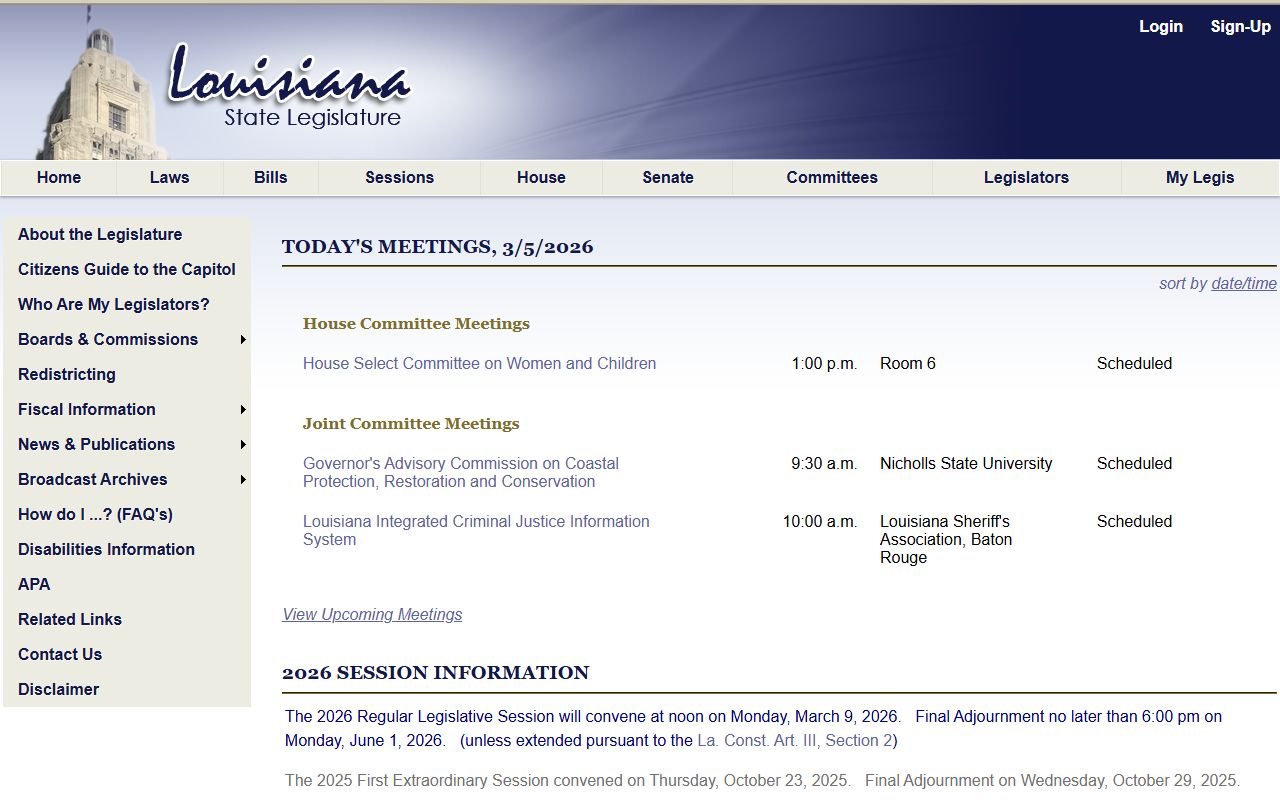
Electronic Recording of Louisiana Deed Records
Most Louisiana parishes now accept electronic recording (e-recording) of documents. E-recording lets title companies, attorneys, and lenders submit documents digitally for recording without mailing paper. The document is reviewed, stamped with an instrument number, and returned electronically. This cuts processing time from days to hours in many cases.
The eVault LA statewide portal supports electronic recording and document storage across Louisiana parishes.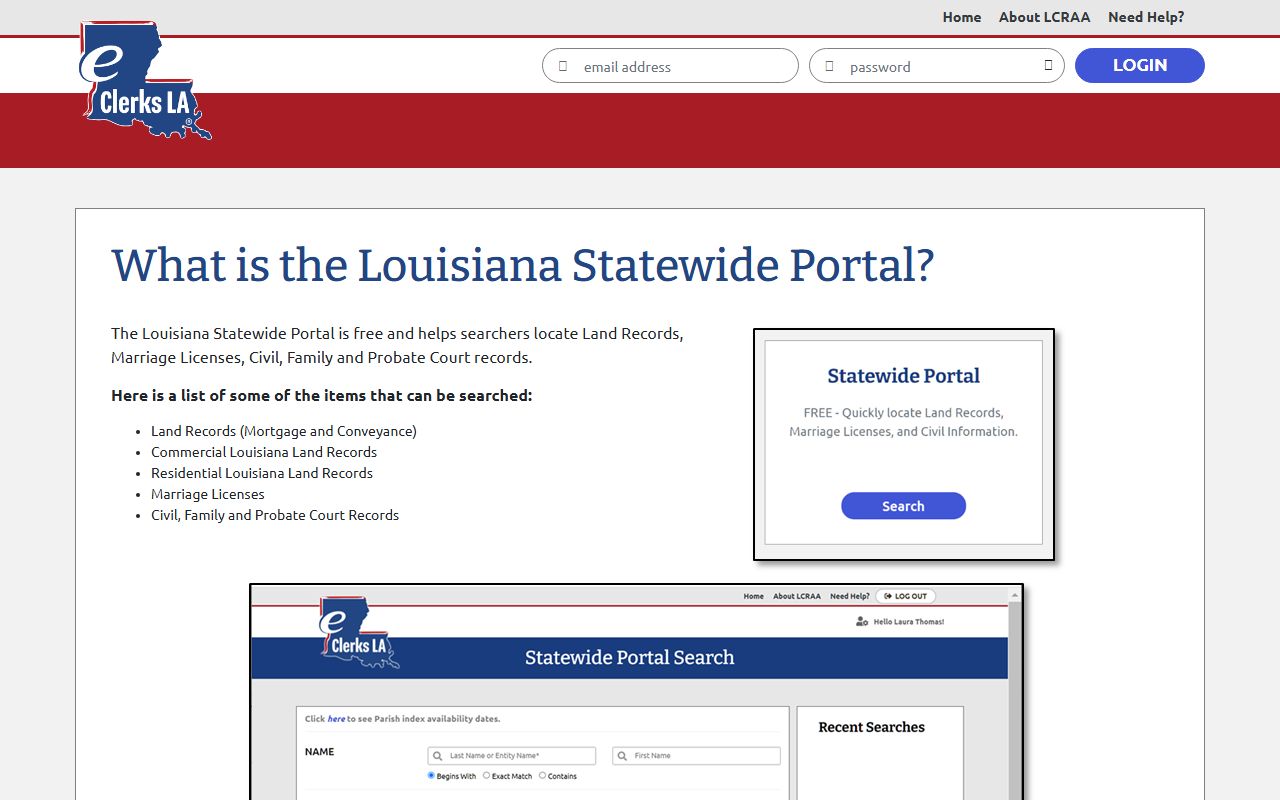
Common e-recording providers used by Louisiana parishes include CSC Global (866-652-0111), SimpliFile (800-460-5657), eRecording Partners Network (EPN), and Indecomm. Not every provider is accepted by every parish, so check with the specific parish clerk before submitting. Some parishes, like Iberia, have restricted to a single provider: as of January 1, 2022, Iberia Parish uses eClerks LA only and no longer accepts CSC, EPN, SimpliFile, or InteleDoc.
The Louisiana Clerks Portal provides resources and information for all 64 parish Clerks of Court.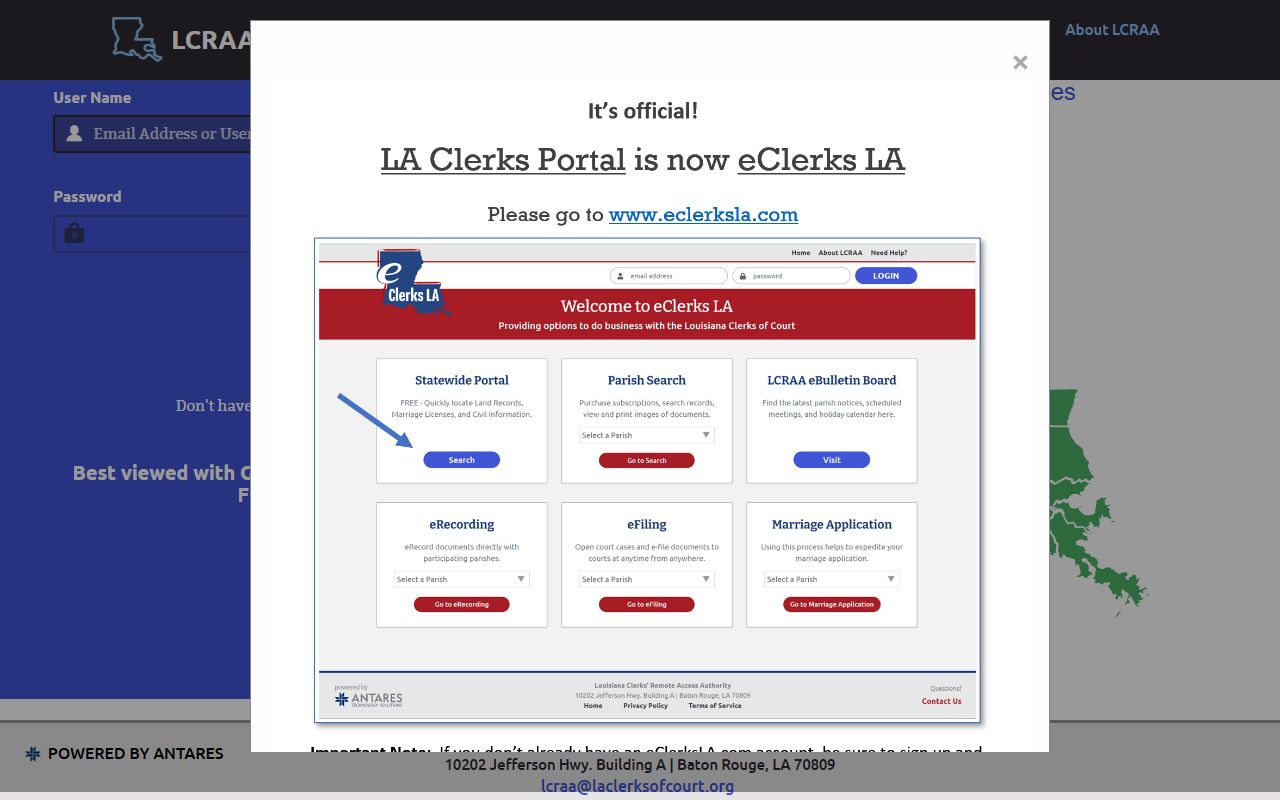
Louisiana Deed Record Laws
Several statutes and code articles govern deed records in Louisiana. Louisiana Civil Code Article 3338 states that documents affecting immovable property must be recorded to be effective against third parties. This is the core rule that makes recording necessary. An unrecorded deed may be valid between the parties but cannot be enforced against a buyer who had no notice of it.
La. R.S. 13:754 created the Louisiana Clerks' Remote Access Authority (LCRAA) in 2014 to maintain the statewide electronic portal. It authorizes the $5 portal fee that is included in all recording fees. La. R.S. 44:32, the Public Records Law, requires custodians to present records for inspection during office hours and to provide copies on request. This is why deed records are open to the public without requiring a specific reason.
Louisiana Civil Code Article 2742 sets the rule that recorded documents become part of the parish archives and are not returned. If you need a copy of what you recorded, request it at the time of filing or order a certified copy later from the clerk. Some parishes now require a self-addressed stamped envelope for return of paper documents if you want them back after recording.
Note: Louisiana law treats parishes as the equivalent of counties. There are 64 parishes, each with its own Clerk of Court who maintains land records for that territory.
Browse Louisiana Deed Records by Parish
Each of Louisiana's 64 parishes has a Clerk of Court who maintains deed records for that area. Select a parish to find local office information, search tools, and recording fees.
View All 64 Louisiana Parishes
Deed Records in Major Louisiana Cities
Louisiana cities do not have separate land record offices. All deed records are filed with the Clerk of Court in the parish that covers that city. Select a city below to find out which parish handles its deed records.